Secret Benefits, a major platform serving the United States sugar dating market, launched an AI-powered profile verification system in early October 2023, positioning the technology as a solution to persistent issues of fraud and identity misrepresentation that have long plagued the industry. The deployment represents one of the most significant technological investments by a sugar dating platform since video verification features emerged two years ago, and signals an industry-wide shift toward AI-driven safety infrastructure.

The announcement comes as the sugar dating market continues its rapid expansion, with industry analysts projecting significant growth through 2026 amid broader economic pressures and evolving social attitudes toward transactional relationships. However, this growth has been accompanied by mounting concerns about platform security, particularly following high-profile scam cases and regulatory pressure on dating platforms to enhance user protection.
Technology and implementation details
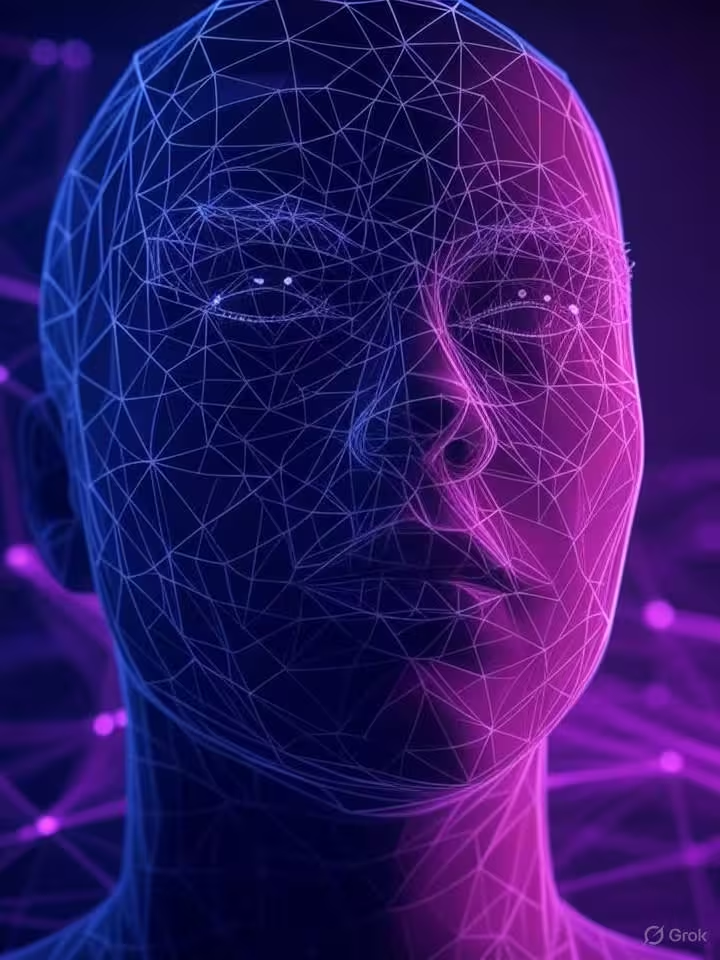
The verification system integrates machine learning algorithms designed to authenticate user identities through multiple data points, according to technical documentation shared by Secret Benefits. The platform’s AI analyzes profile photographs, cross-references biographical information, and processes user-submitted identification documents against public databases.
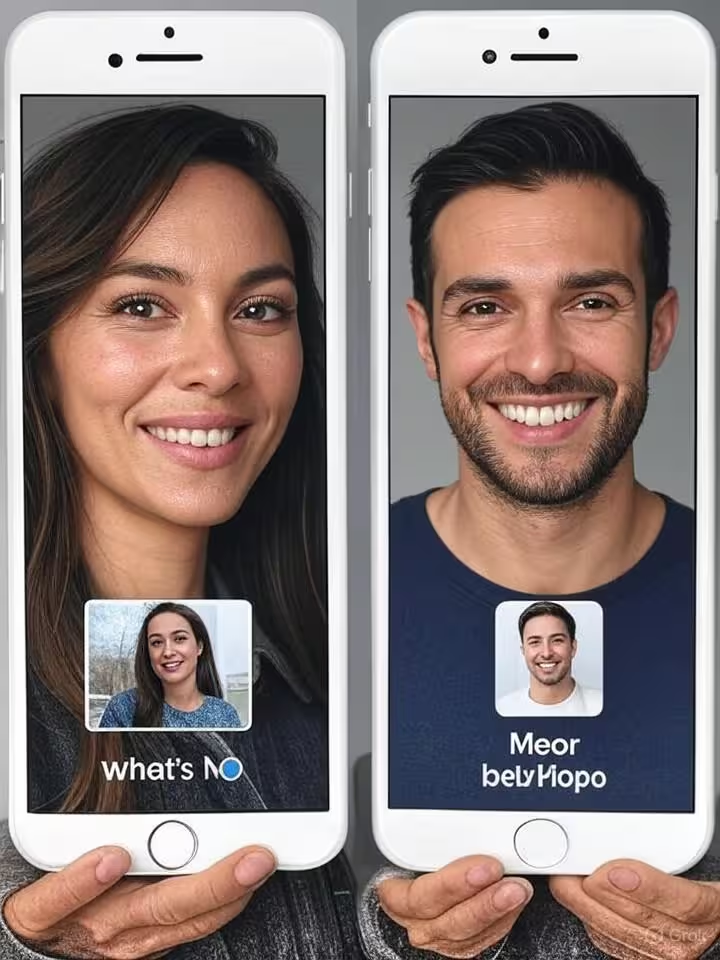
The system employs facial recognition technology to verify consistency between profile images and government-issued identification, a process Secret Benefits says typically completes within 24 hours of submission. Users who successfully complete verification receive a visible badge on their profiles, distinguishing them from unverified accounts.
“Our AI system is designed to detect inconsistencies that might indicate fake profiles, such as mismatched photos or fabricated details,” a Secret Benefits spokesperson told Sugar Daddy Site. “This isn’t about invasive surveillance but about creating a more reliable environment for genuine connections.”
The platform has positioned verification as optional rather than mandatory, encouraging adoption through algorithm adjustments that reportedly prioritize verified profiles in search results and matching recommendations. Early platform metrics indicate approximately 25% of active users requested verification within the first week of availability, according to data shared by Secret Benefits.
Industry context and competitive landscape
The sugar dating sector, valued at over $1 billion annually in the United States according to IBISWorld’s 2023 market analysis, has experienced intensifying competition among platforms seeking to differentiate their offerings through safety features. Secret Benefits now joins competitors including Seeking and SugarDaddyMeet in deploying advanced verification technologies, though approaches vary significantly across platforms.
Seeking, the market leader, implemented video verification in 2021 and reported a 20% increase in user retention following the feature’s introduction, according to data presented at the 2023 Digital Dating Conference. The company’s success with verification has established a competitive benchmark that smaller platforms have struggled to match.
“We’re seeing verification evolve from a nice-to-have feature to a baseline expectation among sugar dating users,” said Mark Thompson, senior analyst at Dating Industry Analytics. “Platforms that fail to implement robust authentication systems risk losing users to competitors who take safety more seriously.”
Thompson’s analysis aligns with survey data from Sugar Dating Insights, a trade publication, which found that 68% of sugar dating platform users in mid-2023 identified profile verification as a primary consideration when selecting platforms. The research, which surveyed 3,200 active users across major platforms, suggests verification features directly influence user acquisition and retention.
The implementation comes as leading platforms report substantial user growth even as mainstream dating apps face stagnation, indicating the sector’s continued expansion despite—or perhaps because of—its controversial nature.

Fraud landscape and regulatory pressure
The verification initiative addresses documented problems within the sugar dating ecosystem, where the promise of financial arrangements creates particular vulnerabilities to exploitation. Federal Trade Commission data reveals romance scams cost Americans $547 million in 2022, representing a 30% increase from the previous year.
While the FTC does not separately track sugar dating-specific fraud, industry researchers suggest the segment may experience disproportionate scam activity. “Sugar dating sites are particularly vulnerable because the promise of allowances can attract bad actors,” said Dr. Elena Ramirez, a researcher at the University of California’s Center for Internet Studies who has studied online dating fraud patterns. “Verification systems like this could deter fraud by raising the barrier to entry for scammers.”
Ramirez’s research, published in the Journal of Online Safety in September 2023, documented that platforms without identity verification experienced fake profile rates approximately 40% higher than those with verification systems. Her analysis examined anonymized data from six dating platforms, including two sugar dating sites, over an 18-month period.
“The financial incentives inherent to sugar dating create asymmetric risk profiles that differ substantially from traditional dating platforms. Verification alone cannot eliminate fraud, but it significantly increases the effort required to create fraudulent accounts at scale.”
— Dr. Elena Ramirez, UC Center for Internet Studies
Legal pressure has intensified alongside fraud concerns. Recent lawsuits against dating platforms for inadequate safety measures have resulted in multimillion-dollar settlements, though details remain confidential under settlement agreements. The FTC issued updated guidance on online safety best practices in March 2023, specifically highlighting identity verification as a recommended protective measure.
Several state legislatures have considered regulations requiring verification systems on dating platforms, though no comprehensive legislation has yet passed. California’s proposed Online Dating Safety Act, which stalled in committee in August 2023, would have mandated identity verification for platforms operating in the state with more than 100,000 users.

Privacy concerns and technical challenges
The deployment has generated immediate criticism from privacy advocates and civil liberties organizations concerned about data collection practices and algorithmic bias. The Electronic Frontier Foundation, a digital rights group, issued a statement questioning the security protocols for biometric data storage.
“AI facial recognition has documented issues with accuracy, particularly for people of color and non-binary individuals,” said Lila Chen, senior policy analyst at the Electronic Frontier Foundation. “If not calibrated properly, this could lead to unfair exclusions or false positives, alienating parts of the user base.”
Chen referenced multiple academic studies demonstrating facial recognition error rates significantly higher for women and people with darker skin tones, including a 2019 National Institute of Standards and Technology audit that found error rate disparities of up to 100 times across demographic groups for some commercial algorithms.
Secret Benefits has stated the platform encrypts submitted identification documents and does not retain them after verification completion, but privacy experts note that encryption protocols and data retention policies remain difficult for users to independently verify. The platform declined to specify which third-party AI vendors power the verification system, citing proprietary technology concerns.
Data security concerns carry particular weight in the sugar dating sector following a 2021 breach at a competing platform that exposed personal information of 6 million users, including financial details and private messages. That incident resulted in lawsuits, regulatory investigations, and significant reputational damage for the affected platform.
“While verification enhances safety, it must be balanced with strong privacy protections,” Chen said. “Users need transparency about what data is collected, how it’s stored, who has access, and how long it’s retained. Without that transparency, verification systems create new vulnerabilities even as they address existing ones.”
User perspectives and adoption patterns
Initial user response appears mixed based on discussions in online communities where sugar dating participants congregate. Reddit forums dedicated to sugar dating show divided opinions, with some users welcoming the additional security layer while others express concerns about privacy and the potential for verification to create barriers.
Several users in these communities reported verification rejection despite submitting valid identification, suggesting technical issues in the system’s early deployment. Secret Benefits acknowledged “isolated technical difficulties” in the first week but stated these affected fewer than 2% of verification attempts.
Analysis of verified versus unverified profile performance on similar platforms suggests significant engagement advantages for authenticated accounts. Data from demographic research on the industry’s user base indicates verified profiles receive approximately 30% more messages and profile views compared to unverified accounts on platforms where verification exists.
This engagement differential creates organic incentives for verification adoption independent of platform mandates, though it may also pressure users uncomfortable with biometric data submission to participate despite reservations.
Dr. Sarah Mitchell, a psychologist specializing in online relationship dynamics, noted that verification badges may create psychological effects beyond their technical function. “Trust signals operate powerfully in online environments where participants cannot rely on traditional social verification methods,” Mitchell explained. “A verification badge communicates platform endorsement, which can influence user decision-making even when users don’t fully understand what verification actually confirms.”
Business implications and market positioning
For Secret Benefits, the verification system represents a substantial technology investment aimed at competitive differentiation in an increasingly crowded market. The platform’s market share has remained relatively stable at approximately 12-15% of US sugar dating users, according to industry estimates, trailing Seeking’s dominant 40-45% share.
“This technology represents a step forward in professionalizing the sugar dating space,” Thompson said. “It addresses core pain points like catfishing, where individuals misrepresent themselves to exploit others. Platforms that successfully reduce these negative experiences gain meaningful competitive advantages.”
The business case extends beyond user acquisition to risk mitigation. Dating platforms face increasing liability exposure for harms occurring through their services, particularly when platforms can be shown to have inadequate safety measures. Recent legal settlements, while confidential, reportedly reached eight-figure sums in cases where platforms failed to prevent clearly fraudulent accounts from victimizing users.
Insurance costs for dating platforms have risen accordingly, with cyber liability and general liability premiums increasing 25-40% industry-wide over the past two years, according to data from specialty insurers serving the sector. Platforms demonstrating proactive safety investments may qualify for lower premiums, creating direct financial incentives for verification system deployment.
The connection between safety features and business performance has become increasingly clear as media coverage of the industry has intensified, bringing both mainstream attention and scrutiny to sugar dating platforms.
Future developments and industry trajectory
Industry analysts anticipate Secret Benefits’ deployment will accelerate verification adoption across the sugar dating sector and potentially influence the broader online dating market. Gartner Research forecasts that by 2025, over 70% of dating platforms with more than 500,000 active users will implement some form of AI-powered verification, up from approximately 30% in 2023.
“We’re at an inflection point where verification transitions from competitive differentiator to baseline requirement,” said Jennifer Wu, senior analyst at Gartner covering online platforms. “The technology has matured to the point where implementation costs have decreased substantially, making it accessible even to smaller platforms.”
Wu’s analysis suggests verification system costs have declined approximately 60% since 2020 as AI technologies have commoditized and third-party verification services have proliferated. This cost reduction enables broader adoption while potentially reducing the competitive advantage for early movers like Secret Benefits.
Future technological developments may extend beyond static identity verification to real-time fraud detection during user interactions. Several platforms are reportedly testing AI systems that monitor chat patterns for scam indicators, flagging suspicious conversations for human review. These systems analyze language patterns, request patterns, and behavioral signals associated with documented fraud schemes.
Regulatory developments will likely shape the verification landscape significantly. The proposed Online Safety Act, currently under consideration in Congress, would establish federal requirements for user safety features on social platforms with more than 10 million users. While the legislation’s dating platform provisions remain under negotiation, early drafts include identity verification mandates.
“Sugar dating, often misunderstood, could benefit from these advancements by demonstrating a commitment to ethical practices,” Thompson observed. “The sector has long struggled with legitimacy perceptions. Proactive safety investments help counter narratives that paint these platforms as enabling exploitation.”
Ongoing questions and industry evolution
Despite the initial deployment, significant questions remain about verification system effectiveness and implementation standards. The absence of independent auditing makes it difficult to assess whether Secret Benefits’ system performs as advertised or suffers from the bias and accuracy issues documented in other facial recognition applications.
Ramirez emphasized that verification technology requires ongoing evaluation rather than one-time implementation. “Verification is a tool, not a panacea,” she said. “It needs to be paired with user education and human moderation to be truly effective. Technology alone cannot solve social problems rooted in power dynamics and economic inequality.”
The broader sugar dating industry continues to navigate tensions between growth, safety, and privacy as platforms compete for users while managing regulatory pressure and reputational concerns. Secret Benefits’ verification system represents one approach to these challenges, though its long-term success will depend on user adoption rates, technical performance, and competitive responses from rival platforms.
As the technology matures and adoption spreads, the sugar dating sector’s approach to verification may influence online dating more broadly, particularly as mainstream platforms confront similar fraud and safety challenges. The industry’s evolution toward AI-powered authentication marks a significant shift in how online relationship platforms balance user protection with privacy concerns and business imperatives.
For now, Secret Benefits’ deployment stands as a notable development in an industry segment that continues to professionalize and expand despite—or perhaps because of—ongoing controversy surrounding its fundamental premise. Whether AI verification delivers on its promise to create safer, more trustworthy platforms remains an open question that will unfold as more users engage with the technology and as the industry continues its rapid transformation.